Based on a law that was passed by Congress in 2005 and revised procedurally in 2020, the federal government (CBP and ICE) is now collecting DNA samples from non-citizen and, as of April 2025, over 2.6 million samples have been collected.
From each sample, the FBI creates a profile and enters it into CODIS – a criminal database.
Stevie Glaberson, from the Georgetown Law Center on Privacy and Technology, says this may violate the 4th Amendment – not only the search and seizure of taking the DNA sample as a speculative matter (in anticipation of a potential crime).
The federal government is raising immigration-related fees over the course of the next few months. These new fees are summarized in this National Immigrant Justice Center explainer and include fees for changes of status applications, work permit applications, court fees, annual fees. There is a handy chart at the bottom of the explainer which summarizes the details.
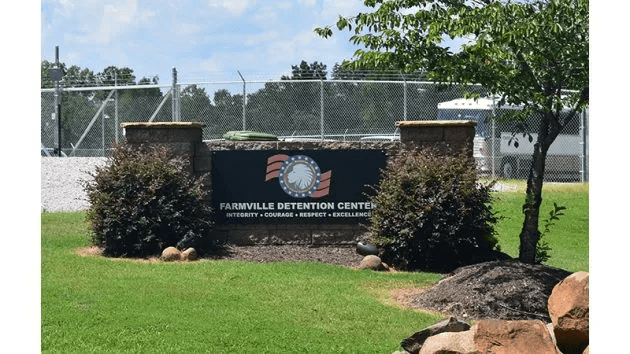
The Farmville Detention Center has new ownership. That filing came Tuesday night, announcing that CoreCivic, based out of Brentwood, Tennessee, had acquired the Farmville facility for a total price of $67 million. The deal is expected to close as of July 1, with 100% of the membership interest transferring to CoreCivic from Abyon LLC, the previous owners. According to the U.S. Securities and Exchange Commission, CoreCivic is the second largest private corrections company in the nation, managing more than 65 state and federal detention facilities. They have properties in 19 states and the District of Columbia. Now that portfolio includes the Farmville facility, a 736-bed facility located at 508 Waterworks Road. According to CoreCivic’s Public Affairs Director Ryan Gustin, some things will stay the same and some will change, with improvements already planned out. Gustin said that the current administrator at the Detention Center, Jeff Crawford, will remain in that role. The company also plans to add to the current number of employees, with “specialty and supervisory positions that will enhance facility operations and create more promotion and career advancement opportunities for staff,” Gustin said. Gustin added that staff members at the center will also get some enhanced benefits as part of the sale. That includes medical, dental and vision insurance, a matching 401(k), paid leave, health advocacy services, financial wellness services, an employee assistance program and a tuition assistance scholarship fund. He added that the company has been reaching out to staff members this week, looking to answer any questions they might have about the shift. A change in the CUP The sale announcement also clears up why Abyon had a sudden need over the last month to clear up the town’s conditional use permit. As reported last week, the Farmville town council agreed to amend the facility’s conditional use permit to match what was agreed to, but never amended, back in 2011. Up to 2011, the facility was only able to house Level 1 detainees under the permit. That was requested by the company and agreed to be changed to “any adult immigrant detainees”. That zoning change was approved by the council in 2011. However, while the zoning ordinance was changed, the conditional use permit wasn’t. That error was corrected earlier this month.
As for the detention center, Gustin also said there would be some improvements to the facility, moving forward. He said CoreCivic plans to invest $5.4 million to upgrade the security systems and perimeter fencing, as well as replacing skylights and improving airflow in the facility. Clearing up a few things Now before we move forward, there’s a couple things to make clear. First off, no, neither Prince Edward County or Farmville get part of that sale price. That’s because neither entity owns or operates any part of the facility. As we mentioned last week, Farmville now is just the host town for the facility. The center has to follow town ordinances, but that’s where the connection ends. To explain, the Farmville council in March 2024 agreed to end their contract with ICE. Prince Edward County took over the contract as the local government connection. That contract remains in place, despite the sale. Gustin confirmed that to The Herald this week. Nothing changes in that document other than the name of the building owner.
The current contract between the county and the detention center runs through March 29, 2029. At that point, the county will have the option to renew, renegotiate or terminate the contract. Prince Edward officials say they’ve spoken with CoreCivic about the sale. “I am pleased that they are committed to ensuring the continuity of the Farmville Detention Center’s operations and enhancing benefits for staff, many of whom call Prince Edward County home,” said Prince Edward County Administrator Doug Stanley. “I also appreciate their commitment to investing in facility upgrades to make it safer, more secure and to provide a better work environment. They also have pledged to continue to be a good corporate partner for Prince Edward and the surrounding communities.” Being a more visible partner There’s one thing Gustin said the company wants to do more than its predecessor and that’s to be visible in the community. By that, he points to a planned $25,000 in charitable giving the group is looking to do. The first of those announcements will be made in the coming weeks, he said. The company expects to pay more than $180,000 in annual real estate and property taxes, as well as annual fees through the current contract with Prince Edward, expected to be roughly $750,000. Concerns for the Farmville Detention Center On the other hand, both the company and county said they’re aware of concerns about the Farmville Detention Center, everything from the escapes earlier this year to the death of a detainee and closure of the center during the pandemic. CoreCivic has also faced controversies in the past at some of its properties. In 2021, the company agreed to pay $56 million to settle a lawsuit accusing the company of inflating stock prices and claiming it “ran unsafe, low quality prisons that caused multiple deaths.” Those claims were never verified. In 2018, the Southern Poverty Law Center (SPLC) filed a class-action lawsuit on behalf of three former detainees against CoreCivic for the practices at the Stewart Detention Center in Lumpkin, Georgia. They claimed that the facility used forced labor to maintain their facility in order to maximize profits. The groups came to a settlement in 2023. Again, like the lawsuit before it, the claims mentioned here were not proven in court. County officials acknowledged the concerns, regardless. “We recognize the concerns about corporate entities operating detention centers,” Stanley said. “That is why the County is committed to advocating for the highest standards of care, oversight, and accountability — no matter who owns the facility.” Stanley pointed to the part of the contract that says he can go into the facility at any point, 24 hours a day. Other county officials are also allowed access. Gustin meanwhile pointed to the fact the Farmville Detention Center will have to follow federal safety and health guidelines. He added that the detention center will “operate with strong oversight and accountability from our government partners, including regular audits and onsite monitors. Both CoreCivic and our government partners share a deep commitment to humane care.”
Riverside Regional Jail is now a contractor for federal immigration enforcement, which is paying the facility to provide detention services, according to a contract between the two obtained by The Times-Dispatch.
The facility signed off on the agreement on May 8. The document itself is heavily redacted.
“The purpose of this task order is to provide Detention services under the provisions of the USMS Agreement No. 83-99-0058,” the contract stipulates. It then goes on to detail daily reimbursement rates for detaining prisoners, figures that were withheld by a public records officer for the jail.
The contract also includes a requirement that the agreement be kept confidential, stating that there “shall be no public disclosures regarding this agreement by the provider” without review and approval from ICE.
Riverside Regional Jail, in Prince George County, differs from other local Richmond jails by virtue of being run by a board, which hires an appointed superintendent. In October 2024, the board hired Col. Jeffrey N. Dillman to the position.Dillman came to the jail after years as a warden within the Virginia Department of Corrections.
Dillman declined to comment on the contract.
The 1,500-bed jail has a history of garnering attention for the wrong reasons: 12 people died within the jail in the past three years, the highest total of any jail in Virginia, a figure first reported by WRIC news. Last October, disturbing photos emerged of jail staff appearing to pose an unconscious woman’s body for a mugshot. The woman, Neicole Sankey Lewis, died shortly afterward.
The contract may be necessary because of ICE’s ramp-up in immigration enforcement. Since President Trump took office, arrests of undocumented immigrants have surged, particularly in Virginia. The state has seen a 470% increase in immigration arrests, according to figures from the Deportation Data Project. The organization has been regularly suing ICE to access up-to-date statistics, which the agency doesn’t regularly share.
On April 13, the most recent date for which The Times-Dispatch could find publicly accessible data, 45 out of 181 ICE facilities across the country exceeded their contractual capacity. That includes the agency’s two Virginia facilities. On that date, an ICE facility in Caroline County rated for 336 individuals exceeded its contractual capacity by 32, according to data shared by researchers with the TRAC data project at Syracuse University.
A spokesperson for ICE did not reply to questions on the need for the contract on Monday morning.
This survey of US sheriffs, conducted by the Marshall Project in 2022, provides a good overview of the roles sheriffs play, their backgrounds, and their thoughts about immigration.
Do you wonder what’s going on in Mexico in 2025 now that the US has changed its asylum practices?At minute mark 37 of this podcast, you can hear Gretchen Kuhner (ED of the NGO El Instituto para las Mujeres en la Migracion) talk about current conditions in MEX regarding enforcement, detention, sylum, etc. She mentions this:
1. MX has a detention center in Villahermosa, Tabasco to hold people from Guatemala, Honduras, and El Salvador before deportation. It also holds some nationals from other countries who are eventually let out on the street.
2. 3-4% of MX GDP is remittances – MX’s first priority is protecting the Mexicans in the US
3. Mexico has liberal asylum “coverage” (including gender-based violence) but you must apply w/i 30 days, remain in the state where you first applied. And the Biden administration 2023 requested that MX stop giving work permits to asylum seekers.
4. National Immigration Institute (unarmed) aided by the National Guard (armed) stop buses, move people to southern MX.
The CGRS (Center for Gender and Refugee Studies) reports that in the case of “Matter of KESG” (KESG = initials of the Salvadoran woman seeking asylum) the Board of Immigration Appeals ruled against asylum.
Legal precedent over decades established that women are targetedand persecuted b/c they are women.
This case decision seeks to provide a case precedent that:
1. Women are not recognizable as a Particular Social Group (one of five proofs to seek asylum along with race, religion, nationality, and political opinion).
2. there is no such thing as gender-based persecution
The lawyers on the call from CGRS, Tahirih, ANAR (Afghan), and Harvard state emphatically that each case is made on a case-by-case basis and we should continue to recognize that women and girls are eligible for asylum.



 Immigration Insight